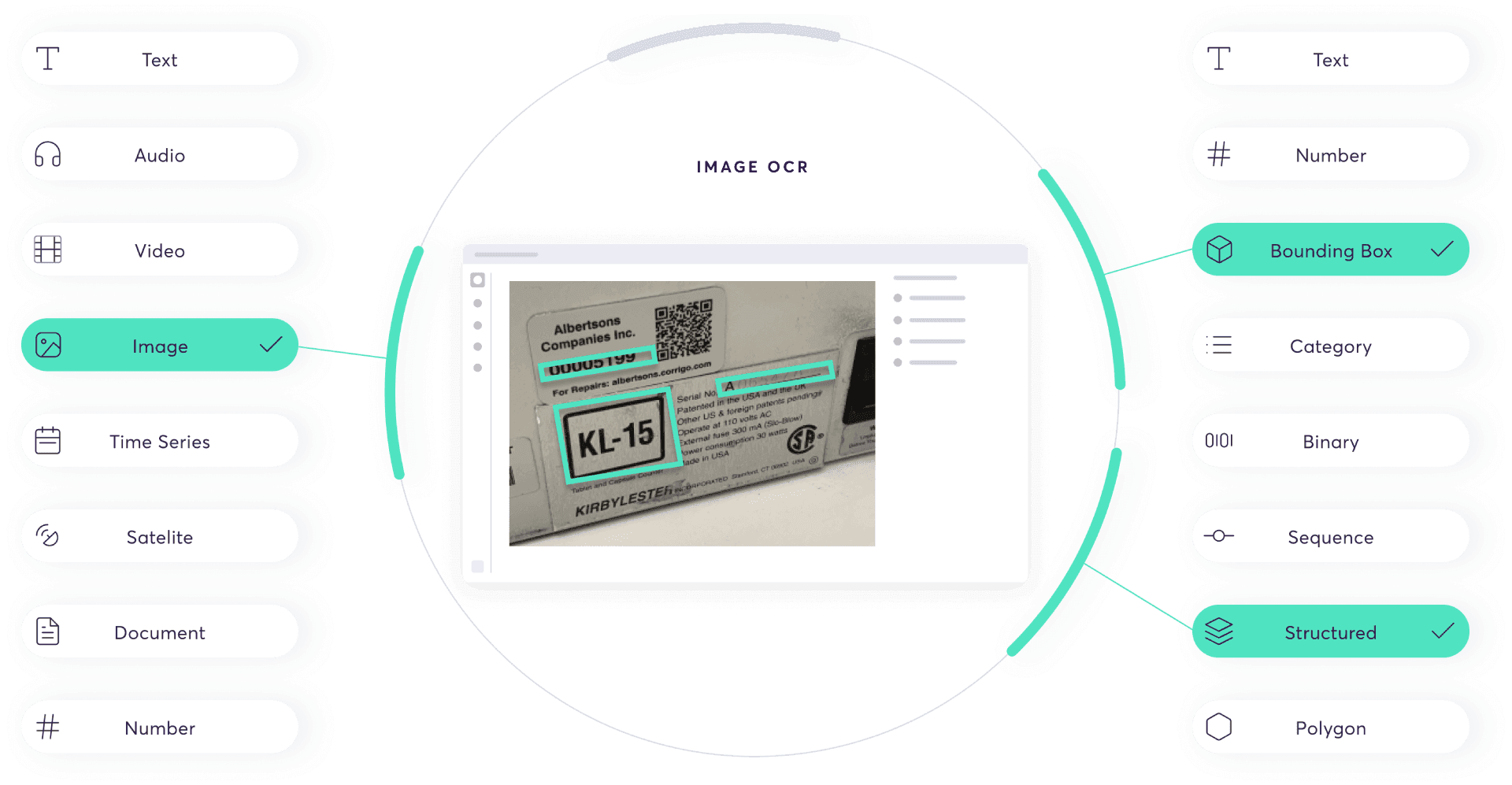
A global leader in testing, inspection, and certification (TIC) needed to automate a core process of their asset management business. The company partnered with super.AI to automate nameplate data extraction and entry, drastically accelerating data capture time while improving accuracy.

A leading global testing, inspection, and certification (TIC) services company leveraged Super.Extract to automate nameplate data extraction, demonstrating how artificial intelligence (AI) can reduce errors and costs while improving data quality and freeing up human resources.
The company operates globally across a number of sectors providing health, safety, and compliance testing, inspection, and certification services. The company encountered a data quality issue involving a core process where key information from asset and equipment nameplates was photographed then manually transcribed. For serial number transcriptions alone, the company saw a 7% error rate. Working with super.AI, the company solved this problem by using artificial intelligence to automatically extract nameplate data from images.
We couldn't have handled the customer workload in house. super.AI helped us handle it , while also providing a labor rate that benefits us at an amazing accuracy. We went from something we were not able to do to something we don't have to worry about! This partnership has allowed us to significantly expand our workflow
By leveraging Super.Extract, super.AI’s no-code solution for automated data extraction, the company can now pull relevant details such as manufacturer name, model number, and serial number from nameplates automatically with nearly perfect accuracy. The company is able to upload large amounts of data quickly and efficiently via API, in contract to manual alternatives offered by other providers. The total estimated economic impact of this project is greater than $5M per year from both labor cost savings and enhanced data processing capacity.
Everyone loves the ideas, really easy to sell 6x improvement in accuracy at a cost savings and getting our assessors back in the field looking at buildings quicker. By the end of next year I could see us pushing 100X more images to you.
“We simply couldn't have handled our current customer workload in-house before super.AI. Time-consuming, manual data processing was preventing our business from scaling. This partnership has allowed us to significantly expand our workflow beyond what we thought possible.”
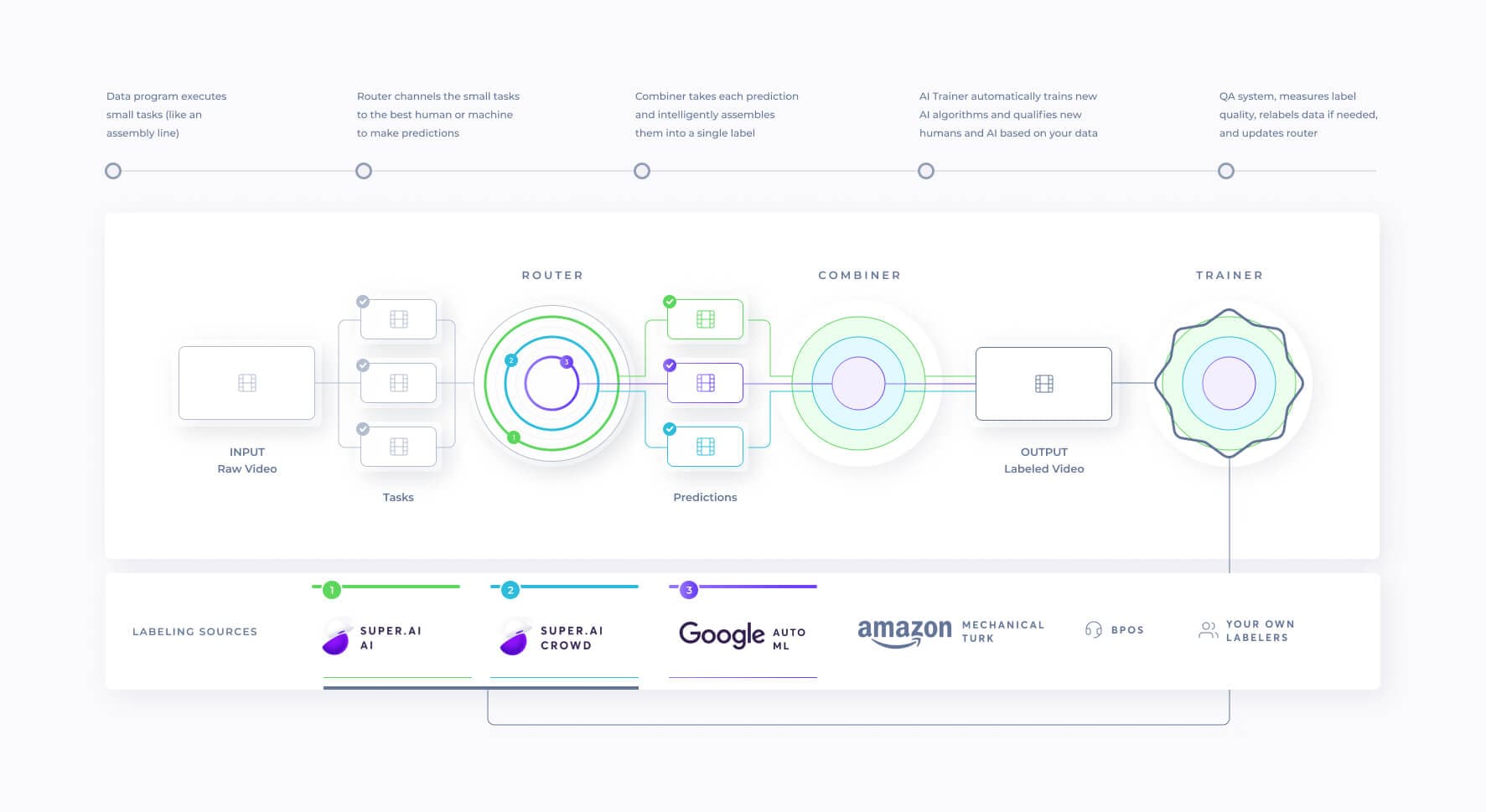
The super.AI product suite offers no-code solutions for processing video, image, audio, text, and other unstructured data automatically using AI. Build artificial intelligence applications #X faster than alternatives thanks to pre-trained models. Guarantee 99%+ data accuracy using a combination of AI and human workers. Some real-world applications of AI in TIC services include:
Nameplate Extraction: Automatically extract information such as equipment serial numbers, model numbers, product expiration dates, and more from inspection images.
Automate Vehicle Damage: Automate vehicle damage detection and achieve a new standard of accuracy and speed at a lower cost.
General Damage Detection: Automate the detection of equipment or building damage such as surface cracks and water intrusion using inspection images.
Corrosion Monitoring and Detection: Automatically identify corrosion in boilers, pipes, storage tanks, vessels, and equipment using images and videos.
Product Defect Detection: Automate the detection of defects in products during manufacturing, such as cosmetic issues, poor welds, and assembly flaws.
Seismic Risk Assessments: Automate the analysis of seismic hazards and assess structural vulnerabilities.
Fuel System Inspections: Automate the processing of fuel system inspections for wear, damage, or leaks.
Equipment Inventory: Automate asset tagging and management by quickly transcribing the tags into your format of choice.