By super.AI
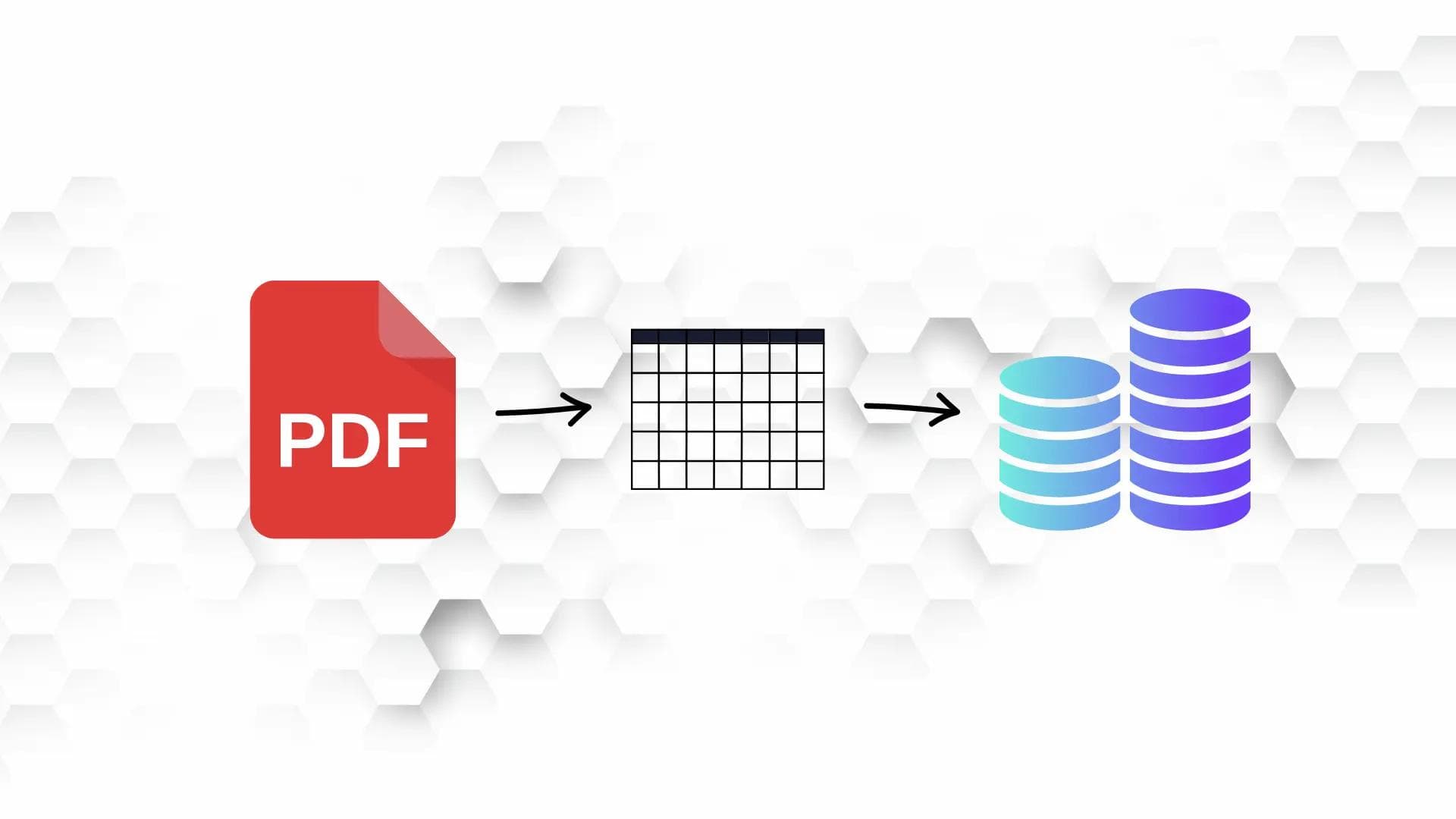
The main Reducto alternatives are super.AI, Docsumo, Extend, Google Document AI, LlamaParse, and Unstructured, and the right choice depends on who will build and run the workflow. Reducto describes itself as a document platform for AI teams, with APIs for parsing, extraction, splitting, and editing. If your engineering team is building document processing into its own product, Reducto may be the better fit. If an operations team wants to build and review document workflows without writing code, consider super.AI. Upload a file, describe what you need in plain language, and super.AI builds the flow and shows each step. This comparison uses each vendor's own website, checked October 15, 2026.
super.AI publishes this page and is one of the alternatives listed. Alternatives appear in alphabetical order and are not ranked. Details about Reducto and the other vendors come from their own websites, checked October 15, 2026, and may change, so check each vendor's site for current information. The "good fit" notes are our judgment, and we make no claims about any tool's accuracy. All product names are trademarks of their owners.
Reducto's homepage headline is "Turn documents into data." It calls itself "the agentic document platform for leading AI teams who demand enterprise performance at scale." Its products include Parse, Extract, Split, and Edit APIs, and its docs say you can "Parse your first document in 5 minutes with Python, Node.js, Go, or REST."
Reducto also offers Studio, which it describes as a way to "Build, test, and deploy document pipelines without code." In production, "Your app calls the API with the Pipeline ID and picks up changes automatically."
On pricing, the Standard plan is "Pay-as-you-go for early-stage teams" and comes with "$150 in free usage"; its pricing page adds, "After your free $150, standard rates apply." Its FAQ says "Standard rates start at $10 per 1,000 pages for r-1 Parse and $20 per 1,000 pages for Extract." Growth and Enterprise plans have custom pricing. Its docs list deployment options as "SaaS, hybrid VPC, full VPC, or air-gapped on-premises," and its pricing page places VPC and on-prem deployments on the Enterprise plan.
How each vendor says you can start, and what it publishes about pricing, checked October 15, 2026. Sources are listed at the end of this page.
Docsumo calls itself a "Document AI Layer for Enterprise Workflows" and says its AI agents "collect, classify, extract and cross-check every document in a file." It names lending, insurance, and eligibility teams as its focus. Documents come in by email, upload, or REST API, and structured JSON goes back to your systems by webhook.
Good fit for: lending and insurance teams whose files hold several documents that must agree. Our Docsumo alternatives comparison covers it in more detail.
Extend's homepage headline is "Production-ready document processing." It describes document APIs for agents and pipelines, and its pricing page lists Parse, Extract, Classify, Split, and Edit APIs, plus Studio and Workflows, on its Pay As You Go plan. It lists "Cloud, BYOC, or Hybrid deployment," and its free start comes with "No contract, monthly minimum, or sales call."
Good fit for: engineering and AI teams that want a self-serve document API, much like Reducto's model.
Google describes Document AI as a way for developers to create processors that extract data from documents and classify and split them. It also offers Document AI Workbench, which Google says you can use "to automate data entry by extracting structured data from your documents." Listed prices include "$10 per 1,000 pages" for Layout Parser and "$30 per 1,000 pages" for Custom extractor.
Good fit for: teams already building on Google Cloud that want document processing as a managed service.
LlamaIndex describes LlamaParse as "an AI parsing tool for complex PDFs, spreadsheets, images, and more" and says it is "Designed for developers." Its pricing page lists Free, Starter ($50 per month), Pro, and custom Enterprise plans, and says basic parsing costs "as low as 1 credit" per page. It offers SaaS, plus private VPC deployment for enterprises.
Good fit for: developers turning complex documents into data for AI applications.
super.AI Flows starts from your document. Upload a file, describe what you need in plain language, and super.AI builds the flow and shows each step. Low-confidence results go to human review, and corrections carry into the next run. Outputs include CSV, JSON, and Google Sheets. For enterprise teams, super.AI offers SOC 2 Type II and contractual commitments.
Good fit for: operations teams that want to build and review document workflows without writing code. See how this works on our document workflow automation page.
Unstructured's headline is "We structure your unstructured data," and it says it can "Parse PDFs, tables, forms and scans into structured data your agents can trust." It says it runs the whole pipeline, from connecting sources to chunking, embedding, and loading results into a database. Its Business plan offers a dedicated instance, VPC, or multi-tenant SaaS.
Good fit for: AI and data teams preparing large document collections for agents and other AI pipelines.
Vendor pages only tell you so much. A short side-by-side trial on your own files will tell you more.
It depends on who builds the workflow. For developer APIs, look at Extend, LlamaParse, Unstructured, or Google Document AI. For lending and insurance files, look at Docsumo. For operations teams that want to build without code, look at super.AI.
Several tools offer a free start. Unstructured offers "10,000 free pages to start" with no card required. LlamaParse has a free plan, Extend includes 10k free credits, and Google gives new customers $300 in Google Cloud credit. super.AI is free to start, with no credit card and no sales call required. Docsumo's 14-day free plan is set up with you on a short call.
Reducto is built around APIs and SDKs. Its Studio lets you build and test pipelines without code, and your application then calls the API with a Pipeline ID.
According to their websites, Reducto lists VPC and on-prem deployments on its Enterprise plan, and Unstructured offers VPC on its Business plan. LlamaParse offers private VPC for enterprises, and Extend lists BYOC on its Enterprise plan. Confirm the details with each vendor.
For enterprise teams, super.AI offers SOC 2 Type II and contractual commitments. Ask for documentation during your evaluation, and ask every vendor you are considering for the same.
Vendor details were checked on each vendor's website on October 15, 2026. Vendors update features and pricing often, so confirm current details before you decide.
Upload a document, describe what you need in plain language, and see each step of the flow super.AI builds. Start for free or book a demo. For a wider view of the category, read our intelligent document processing buyer's guide.

The main AP automation benefits, with sourced benchmarks for cost per invoice, cycle time and exceptions, plus how AP automation works and best practices for a rollout.

A buyer's guide to invoice scanning software: seven invoice OCR tools in alphabetical order, who each one fits, and how they compare on trials, pricing, and deployment.

Intelligent character recognition (ICR) reads handwriting on forms and checks. Learn how it works, how it compares with OCR and AI extraction, its limits, and how to test it.