The super.AI blog covers Intelligent Document Processing in practice — how engineering and operations teams classify, extract, validate, and route data from complex documents at scale. Expect technical patterns, production postmortems, model-evaluation notes, and research on automating document-heavy workflows with guaranteed accuracy.
Patterns, postmortems, and research on Intelligent Document Processing from the super.AI team.

Most invoice problems aren't processing problems — they're capture problems. Learn what invoice data capture is, where it breaks down, and how AI fixes it.

Manual document processing costs more than most teams realize. Learn what document process automation is, how it works, and what to look for in a platform.

Freight document processing is quietly draining operations through manual work, errors, and hidden costs. Learn how intelligent document processing is changing the economics of scale for brokers, 3PLs, and carriers.
The AI industry is obsessed with replacement. We think that's the wrong question. super.AI's Brad Cordova on why the best use of AI is making work more human.

Seat-based and per-page pricing weren't built for AI automation. Learn why credit-based pricing is the only model that scales with document complexity and business outcomes.

See how Flows automates document workflows using AI agents and validation—moving beyond OCR to auditable, compliant automation.

See how Flows automates document workflows using AI agents and validation—moving beyond OCR to auditable, compliant automation.

Transform your logistics operations with AI-powered bill of lading extraction. Automate data capture from any BoL format, eliminate manual entry errors, and integrate seamlessly with existing systems for improved efficiency and accuracy.

Transform your logistics operations with AI-powered bill of lading extraction. Automate data capture from any BoL format, eliminate manual entry errors, and integrate seamlessly with existing systems for improved efficiency and accuracy.

Manual document workflows delay fulfillment, increase labor costs, and reduce accuracy. Learn how AI automation solves these problems in manufacturing and logistics.
Automate bill of lading data extraction with OCR technology. Extract fields like shipper, consignee, and reference numbers with 95%+ accuracy. Save time, reduce errors, and integrate with your existing systems.

Transform your logistics operations with AI-powered bill of lading extraction. Automate data capture from any BoL format, eliminate manual entry errors, and integrate seamlessly with existing systems for improved efficiency and accuracy.

Explore how AI-powered document processing delivers measurable ROI through cost savings, operational efficiency, and improved compliance in oil & gas.

Discover how AI-powered document processing accelerates contract workflows, reduces legal risk, and ensures compliance in oil & gas operations.

Explore how AI is revolutionizing freight and logistics operations by automating document workflows, reducing shipping delays, and driving operational efficiency.

Learn how AI-powered document processing enhances security, ensures compliance, and reduces risk in supply chain operations. Discover best practices for data protection.

Poor document management leads to compliance risks, delays, and lost revenue in oil & gas. Discover the hidden costs and how AI-powered automation fixes them.

Learn how Chief Data Officers can leverage AI-driven document processing to automate data extraction, improve compliance, and drive digital transformation.

Discover how AI automates freight and logistics paperwork, including bill of lading, packing slips, and invoices, to reduce delays and improve efficiency.

Discover expert tips and tricks for optimizing your document processing workflow. Streamline your processes and increase efficiency with our actionable advice.

Discover how AI-powered document processing helps supply chain and logistics companies reduce delays, automate invoices, and prevent disruptions.

AI-powered document processing helps manufacturers automate quality control, reduce errors, and improve efficiency. Learn how AI enhances accuracy and accelerates quality assurance workflows.

Discover the transformative impact of AI in accounting. Learn how AI boosts efficiency, accuracy, decision-making, cost savings, and competitiveness in the industry.

Explore how advancements in generative AI are revolutionizing Intelligent Document Processing. Discover how you can achieve greater efficiency, customization, and accuracy in your automation initiatives with super.AI's unique approach to leveraging the power of LLMs for enterprise applications.

Explore AI's transformative role in invoice matching, boosting accounts payable efficiency and accuracy while tackling modern financial challenges.

Learn how intelligent data extraction automates information extraction from complex and unstructured documents, saving time and money for businesses. Discover the benefits of this transformative technology for streamlining operations and improving decision-making.

Learn efficient techniques and tools for extracting data from PDF documents in a snap. Whether you're a researcher, data analyst, or just someone who works with PDFs often, our expert tips will help streamline your workflow and save you time.

Don't risk the security of your data or your company's reputation. Learn why accuracy and security are crucial for automated document processing.

Learn how to streamline your procurement process and reduce errors with AI-powered PO matching. Our blog discusses the best tech stack to automate PO matching, including RPA and IDP.

Explore potential applications of ChatGPT and other LLMs in the Intelligent Document Processing (IDP) and Unstructured Data Processing (UDP) markets.
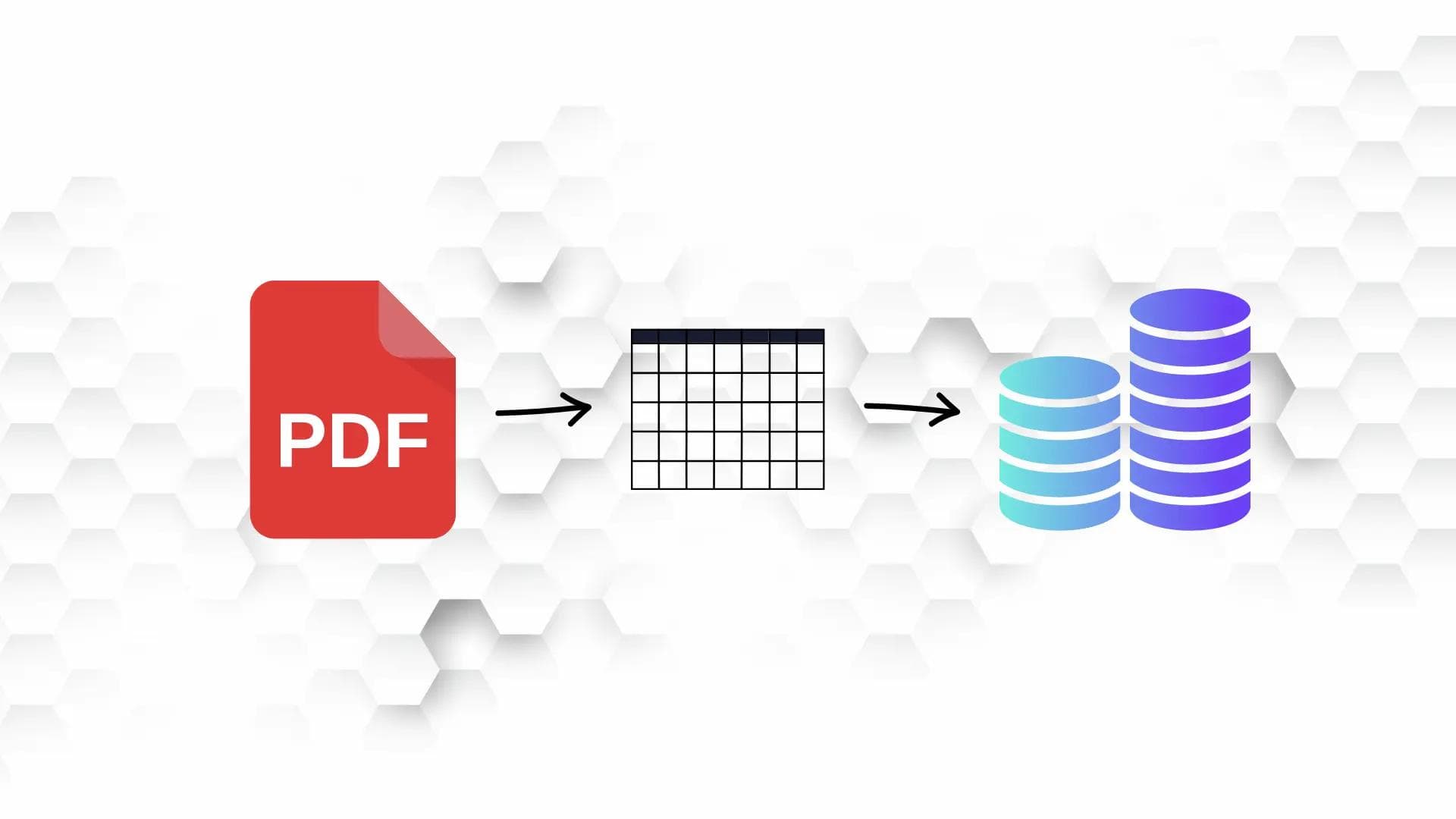
Discover how to streamline your data collection process by using AI to automate table extraction from PDFs and scanned images. Learn about the latest tools and techniques for efficient and accurate results.

Wondering how document data extraction works? Stay up-to-date with the latest information and advancements in the field. Learn about the benefits of implementing a data extraction solution.
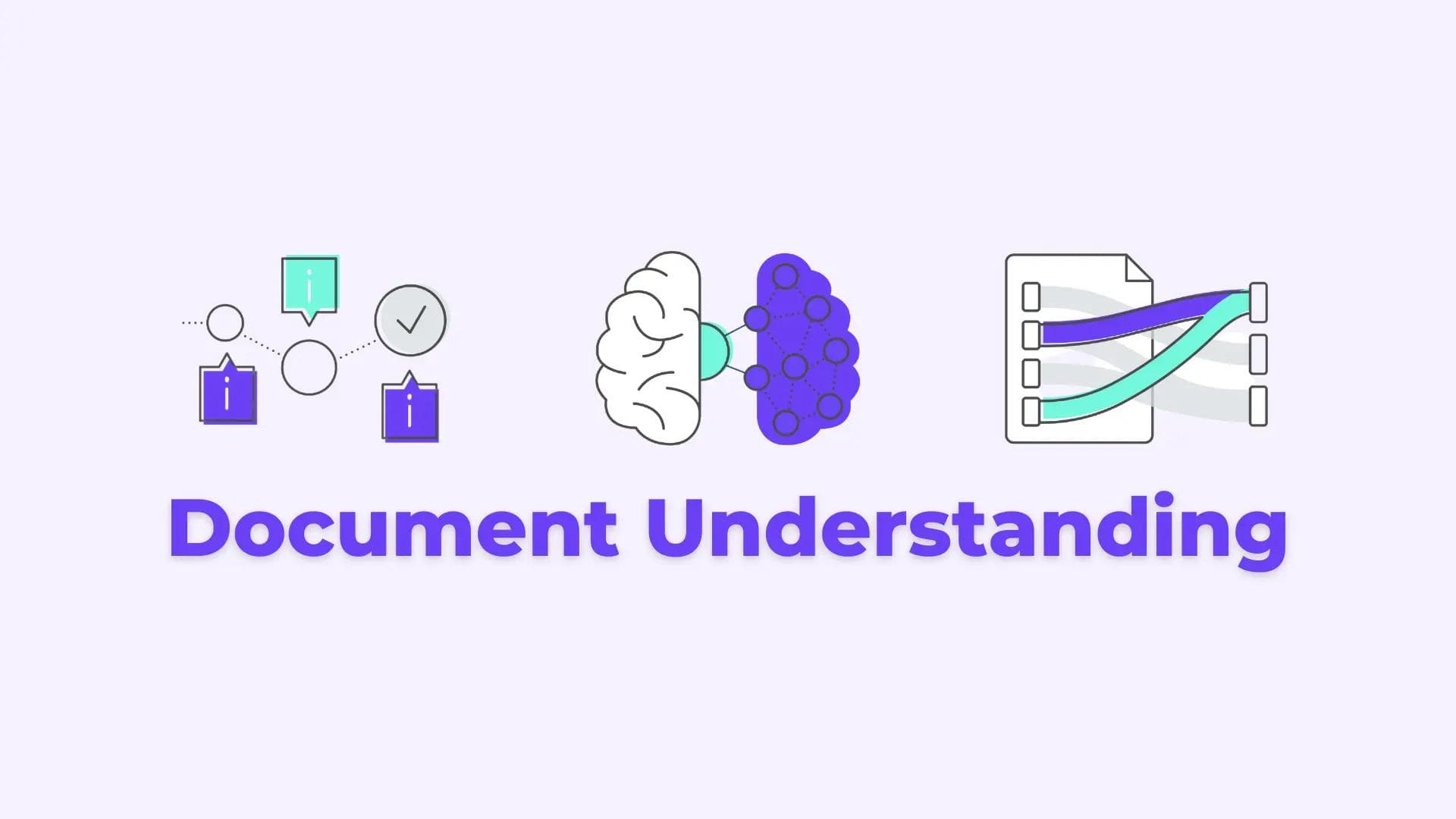
This article explores the basics, benefits, challenges, components, and applications of automated document understanding and its place in the larger scheme of automating complex business operations.

Learn about the process and technology behind converting written text into digital data and its potential uses in various industries. Understand the future of handwriting recognition and its impact on how we work and communicate.

OCR facilitates automated data extraction, helping businesses save time, costs, and other resources. How does it work, and how have recent advancements in AI changed its impact?

Unstructured data is information that doesn’t fit neatly into traditional databases. This is because it isn’t stored in a specific format, and may include audio, video, images, documents, emails, and more.
Discover common document automation use cases for the insurance industry that can accelerate claims turnaround times, reduce errors, and more.

Discover where enterprises are at with intelligent automation, as well as where they’re headed (and what’s holding them back). Download the full SSON report for free thanks to sponsorship from super.AI.
Discover key differences between the super.AI Invoice Parser and the Google Document AI Invoice Parser.

Learn how super.AI was designed to best alternative automated document processing solutions from industry heavyweights.

All operational aspects of the telecom industry involve documents. Learn how and why to process them automatically with IDP.

Business Process Outsourcing has been evolving since its inception. Discover how next-generation IDP/UDP solutions are helping BPO grow into “Business Data Services.”

Discover how and why to automate processing of common logistics documents including bills of lading (BoL), customs declaration forms, packing lists, and more.

Learn how modern Intelligent Document Processing (IDP) and Unstructured Data Processing (UDP) solutions can accelerate digitization and unlock the ability to process any unstructured data at scale.
Discover key differences between the super.AI Invoice Parser and the MS Azure Form Recognizer invoice model.

Global finance runs on data. Discover how your organization can get ahead by processing more of it. Unlock unstructured finance documents at scale with super.AI.

As the global economy slows down, companies are turning to intelligent automation to cut costs and improve efficiency.

Most IDP vendors offer closed point solutions that struggle with Unstructured Data Processing (UDP). To avoid pitfalls, enterprises should ask IDP vendors these four questions.

Learn what the super.AI Data Processing Crowd is, how it works, and how it can transform the way your business automates data processing at scale.

Learn how Super.AI moves document processing forward with invoice processing automation rates of 95% or higher.

Manual and semi-automated redaction is unreliable at scale. Learn why Document.Redact, an AI-automated redaction solution from Super.AI, outperforms Adobe Acrobat—a legacy tool that is the digital equivalent of manual redaction.

First-generation IDP products are falling short, with enterprises struggle to automate invoice processing beyond 50-60%. Both IDP and UDP are seeing expanded adoption and use cases.

In this article, we explain how advances in artificial intelligence make it possible to automate processing of any medical claims document at scale, improving accuracy, speed and cost efficiency.

Learn about purchase order processing, the benefits of automating it, and how super.AI can help.

Businesses remain far too reliant on manual document redaction. Learn how AI and unstructured data processing make it possible to automatically redact information from any document at scale.

Learn how second generation AI document automation solutions are disrupting the market with fresh approaches and better technology.

Learn what data capture is, how it works, its benefits, and how recent advancements in AI are disrupting this $5B market.

Learn how AI can be used to automatically extract information from any customs document, as well as how this functionality can be leveraged to power advanced customs process automations.

Discover the benefits of automating invoice processing with AI, including the technology involved, common hurdles to success, and how to get started.

Discover the process and benefits of automated document processing for transportation and logistics, including the various documents types that can be processed automatically using AI.

Learn how automating your KYC compliance with AI can improve accuracy, save time and money, and ensure regulatory compliance.

Automate processing used car images with AI to improve your digital customer experience.

Find out why unstructured data is the key to digital transformation success, and how it all begins with choosing the right platform for data digitization.

Discover the 7 principles that define privacy by design, including how to get started and enhance data privacy with AI.

Discover how artificial intelligence can be used to make unclear transactions a thing of the past.

Will enterprises move fast enough to leverage AI-driven data processing, or be left behind by AI-first startups waiting in the wings?

Find out how automated redaction can help your organization protect sensitive information and streamline compliance with global privacy laws such as GDPR, CCPA, and more.

As autonomous vehicles (AV) become more prevalent, the amount of data generated by self-driving cars is increasing exponentially. This data includes images and videos captured by the car's sensors, which can contain sensitive personal information such as faces or license plates.

The amount of unstructured data is growing rapidly, and companies that fail to adopt technologies that enable unstructured data processing will suffer catastrophic failure.

Compare the pros and cons of different routes to image and video data protection to ensure privacy compliance for using, handling, and storing real-world visual data.

By leveraging AI to streamline FNOL document processing, companies can drastically lower claims processing costs, reduce (or even eliminate) manual data extraction, and drastically accelerate claims processing.

Easy, AI-automated image data redaction. Take a deep dive into the power of Image.Redact for swift processing of visual data to ensure strict privacy compliance with GDPR, CCPA and beyond.

Save time and the planet while reducing errors with invoice automation powered by AI. Start building a more sustainable invoice process today.

Discover what unstructured data processing software does and key features to look for when making a software purchasing decision.

Learn about the five most important things to look for when making an intelligent document processing (IDP) purchasing decision.

Unstructured data processing (UDP) is the connective tissue that joins IDP, AI, ML, RPA, BPA, NLP and more intelligent automation technologies. Dive into the alphabet soup and thank us for it later.

No-code platforms are the next evolution of technology. Find out why no-code automation and AI are today’s essential skills.

Automatic data processing is easily achievable with Unstructured Data Processing (UDP) that uses AI to extract and organize information and fuel business process transformation.

New research from the Shared Services & Outsourcing Network shows AI rapidly gaining on RPA. Discover the top automation objectives for 2022, the state of automation maturity, how companies are using time saved by automation, and more.

Explore 11 topics that help us better understand the future of artificial intelligence. From hyperautomation to AI safety, these are the things we should all know (but probably don't) about AI.

Move past the AI hype and hone in on the trends that actually matter. Join Super.AI CEO, Brad Cordova, and Intelligent Automation author, Pascal Bornet, as they discuss the future of artificial intelligence.

GitHub is not suitable for machine learning because ML isn’t just code, and that’s what GitHub was made for. Learn how this misfit is contributing to the reproducibility crisis in machine learning.

Artificial intelligence offers tremendous benefits to financial services providers, but many face obstacles when deploying AI solutions.

Discover why AI safety is one of the biggest problems facing artificial intelligence, common approaches to AI model safety, how AI can make products safer, and more.

Find out what hyperautomation is and how you can get started on your hyperautomation journey with AI for unstructured data processing.

What does RPA + AI really mean? Our guide to intelligent automation for the real world of data has answers. Learn about the evolution of automation, how to automate more processes by bringing AI into RPA, and more.

Learn how AI can enhance your marketing efforts, explore common applications of AI in marketing, and discover tips for getting started on your intelligent marketing automation journey.

Artificial intelligence (AI) is a far-reaching branch of computer science focused on creating machines that can perform tasks that usually demand human intellect.

Discover the advantages of augmenting manual visual inspection with artificial intelligence. AI-based visual inspection offers faster quality control that is more accurate and flexible than traditional approaches.

Learn how insurance adjusters can leverage computer vision to accelerate claims processing times, boost customer satisfaction, and reduce churn.

Don't get distracted by buzzwords or doomsday predictions about AI taking over the world. Learn how artificial intelligence can be used to unlock insights buried in unstructured data, make work more efficient, boost employee morale, and more.

This article explores the technology trends transforming the financial services industry, as well as real-world applications of AI in finance.

Discover real-world applications of AI-powered automation in the testing, inspection, and certification industry. Explore no-code AI solutions for nameplate data extraction, corrosion detection, vehicle damage assessment, and much more.

AI-powered unstructured data processing enables insurance companies to automate claims handling. Automation improves accuracy by eliminating data extraction errors and accelerates claims processing thanks to rapid data extraction.

Artificial intelligence has made it possible to automatically redact sensitive information from virtually any data type. Don’t accidentally expose confidential data when you could just automatically redact it. Learn how Super.AI leverages AI to protect sensitive information in image, video, text, and other unstructured data.

Join us at the largest gathering of venture capital in the world! Find Super.AI at Slush 2021 from Dec 1-2 in Helsinki. We hope to see you there.

Join us Dec 1-3 in New Orleans to discuss unstructured data processing and the future of AI-powered automation at IA Week Winter 2021.

6 Ways to Use Automatic Image Processing to Streamline Your Business

Vehicle damage detection is a complex task that requires years of training and experience for human workers. Discover how it can be automated in a matter of weeks using artificial intelligence.

Speech recognition involves converting spoken language into text. Discover how artificial intelligence is used to power speech recognition applications spanning customer service, smart devices, home automation, and more.

Manually transcribing nameplate data is a boring, repetitive, and time consuming task that humans are poorly suited for. Learn how AI can be used to automate data extraction for TIC services providers, leading to an estimated operational cost savings of 97%.

Part-of-speech (POS) tagging is an essential component of teaching machines to understand human language. This article explains how AI-powered POS tagging works and what it can do for your business.

Learn how optical character recognition works, the ways artificial intelligence is enhancing it, and what it can do for your business.

Corrosion costs organizations a staggering $2.5T annually. Emerging AI solutions can automate early detection of corrosion saving businesses billions.

Named entity recognition (NER) is the task of identifying and categorizing key information in text. Explore the basics of NER and how you can apply it.

The rapid expansion of unstructured data is quickly reaching crisis levels. Learn why this unprecedented growth comes with problems, and how AI can be used to overcome them.

Digital imagery now forms the backbone of thousands of business models, research institutions, and government agencies. This has created a contingent need for privacy protection to remain compliant with regulations, such as GDPR or CCPA.

With super.AI you can use our in-house labelers or you can choose to label data yourself or with team members you invite. The option you choose depends on your project’s requirements.
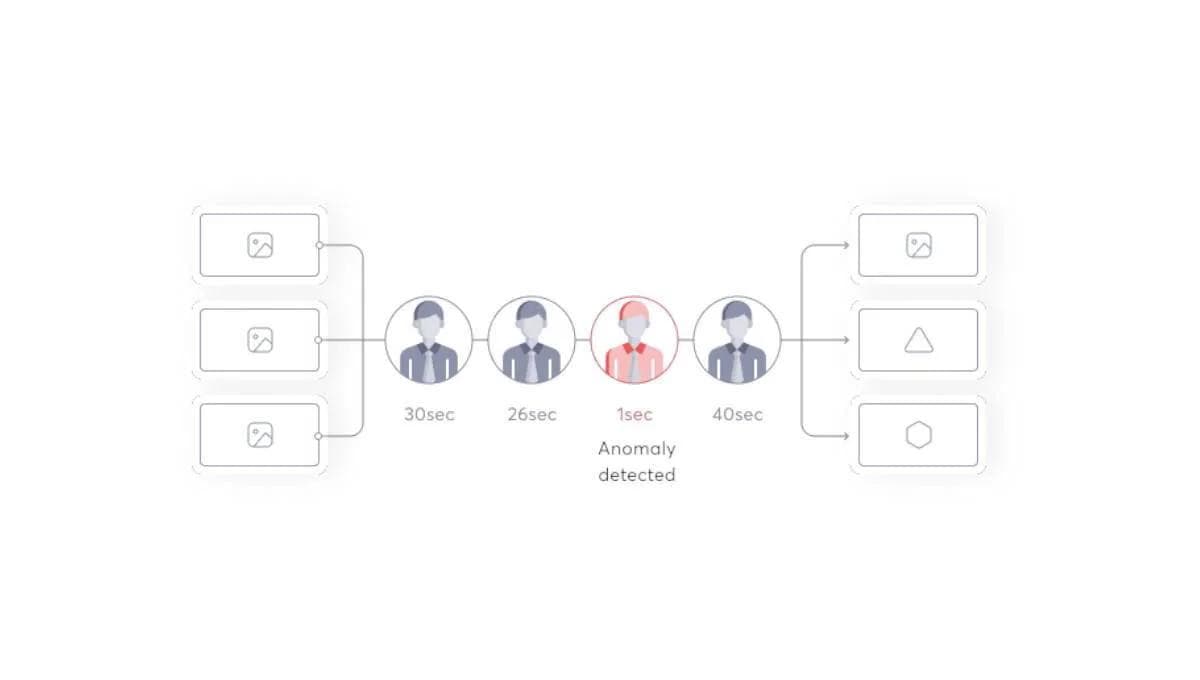
We take a look at the main quality assurance techniques our platform uses to understand better how the complex process of labeling data can come with a quality guarantee.

A smooth in-store experience without waiting times is now a hallmark of successful retailers. Find out how we’re helping brick-and-mortar stores label the data they need to provide a modern shopping experience.

Super.AI enables a four-step data lifecyle that allows for continuous improvement to your project.

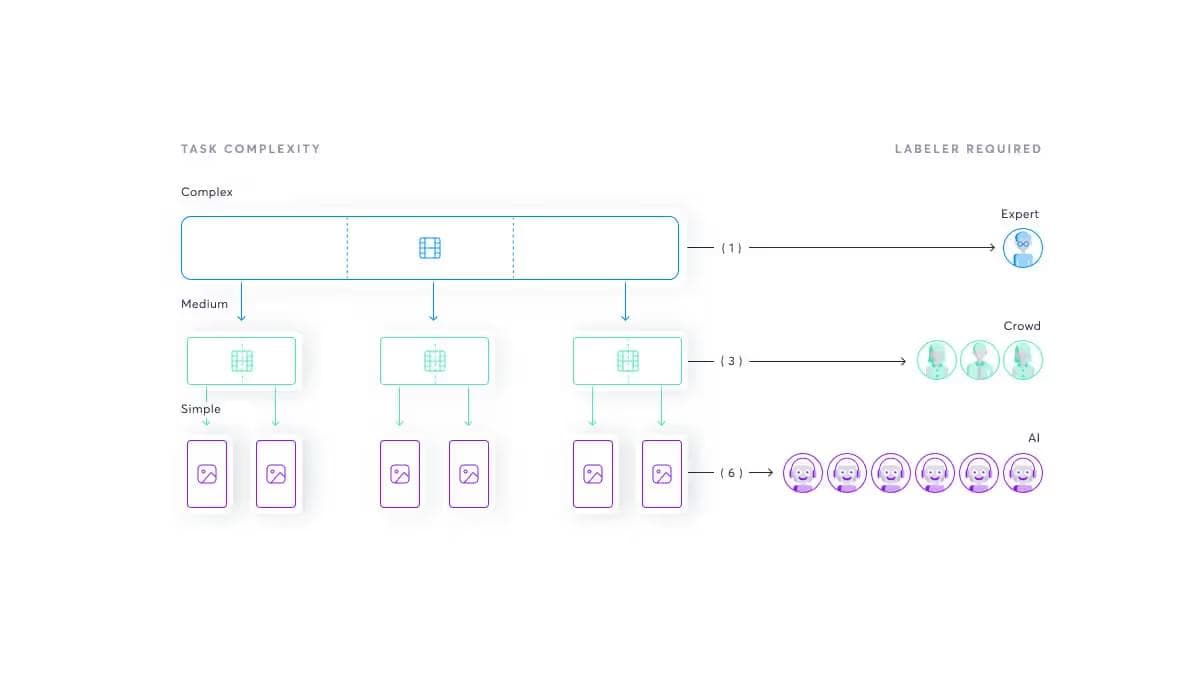
The AI compiler is the super.AI execution system. It ensures that all inputs are split into smaller tasks that are efficiently and accurately labeled before being recombined into a coherent output.
Data programming is a powerful and flexible tool that makes it easy to produce high quality labeled data for your specific use case with minimum effort.

Automation is the most valuable time-saving device. Every automated manual process is time made available to pursue creative and product-defining ideas. At super.AI, we specialize in breaking down complexity and making difficult tasks seem simple. Read about how we've been helping several software companies reduce complexity in their business with the help of our solution.

The POC (Proof of Concept) is an important and widespread way of qualifying technology providers. In this article we outline how Sun Tzu, a military strategist, would approach this modern day technique.

What guarantees the quality of output when labeling data? The answer is ground truth data. Ground truth is a pair of input and output data used as a proxy for real truth. The closer the ground truth to the real truth, the higher the upper bound quality of the generated output. Read on for what it is

Last week we attended AI in the City, an event for AI insurance thought leaders and executives. I wanted to share with you a quick recap of the event and some of the thoughts that I took away at the end of the day.

The world of machine learning (ML) is complicated. If you’re thinking about integrating ML into your project, there are hundreds of questions you will quickly find yourself asking. How to store, version, and process your data? What development framework and hyperparameter optimization and resource management solutions should you use during the development and training of your model?

Customer service chatbots are some of the most widespread uses of AI amongst companies. Find out how intent recognition can deliver benefits to your sales pipeline and customer support efforts. ML can now understand users’ goals, paving the way for automated, personalized responses.

Product recommendations are essential to increasing revenue and user engagement and AI can significantly scale them . This blog post details our work with two major ecommerce sites to help them make the most of their existing data in a recommender system.

From social media to news coverage, there's a wealth of data for sentiment analysis to help better understand the perception of your brand or business.

OCR is one of the most widely used ML techniques. We explore three use cases showing how OCR has improved accessibility on a global scale.

A look at what companies need to do, not just to survive, but to flourish within the new landscape forged by the advent of ML.

Named entity recognition (NER) is a key component of natural language processing (NLP) .In this post, we’re going to look at how companies and organizations have successfully deployed the technique to help them achieve their goals.

We explore the final two areas where the concealed complexities of machine learning can create costly surprises: configuration and R&D debt.

Messy real-world input data can quickly wreck havoc on a machine learning (ML) system that isn’t adequately prepared. Here, I show you how to stay ahead.

In this article we talk about how the algorithms ML models learn are determined by input data, rather than by a programmer’s handwritten rules—has profound system-level performance effects in ML and introduce the topics of covariance and prediction shift detection.

What is sentiment analysis and how does it work? We show you can apply this ML technique in your business.

Santa reached out to Canotic to help him build some machine learning models to make his work a little easier. Here's how we helped.

95% of the code in an ML model is actually just “plumbing”: code that handles configuration, feature extraction, monitoring, analysis, resource management, serving production models, etc.. In this post we talk about glue code, processing spaghetti code and how to tackle dead experimental code paths.

AI is transforming agriculture. We explore use cases showing how machine learning is applied in the industry to increase yields and resourcefulness.

In ML systems, data dependencies carry a lot of depth but are more difficult to predict. In this article, we explore the importance of quality input data and introduce a new danger: feedback loops.

The second costly surprise: machine learning often evolves into a complex web of interlinking systems. Changing anything in the system can have wide-reaching and potentially negative effects far from the source of the change. This post explores how to avoid the problems such as a system poses.

The first costly surprise: machine learning lacks the clean abstraction of software. Leaky abstractions mean we can’t always rely on the contract that ML offers. This post examines what abstraction is, why it’s important, and how ML’s weak contracts can result in an ineffective system.

To create training data for ML projects, you need to work with human labelers. That means writing clear instructions on how to label your data. Here’s 12 rules for how to do this right.

Real-world applications of ML require extremely high accuracy to provide a consumer benefit. Increasing accuracy is a balancing act between bias and variance. To minimize both, and thereby increase accuracy, ML models requires plentiful high quality training data.

Everyone knows that machine learning (ML) has the power to create positive change, but not everyone is aware of its 7 biggest blockers you need to overcome to actually make it work in the real-world. This introductory post introduces the dark side of ML, ready to be combated in further instalments in the series.